


Noticing Partners with Penrose Education: Bringing Context to AI-Supported Mentoring in Teacher Education
Posted on 9th February 2026 by Elena Oncevska Ager & Matthew AgerWe are delighted to announce that Noticing is partnering with Mosaic by Penrose Education, a platform built specifically for initial teacher education. This collaboration brings together Noticing's AI-powered reflective mentoring with Mosaic's established network of training providers, mentors, and trainees across the UK and Australia.
More Than Technology
This partnership is not simply about connecting two platforms. It is about building a community of practice where technologists, researchers, teacher educators, and practitioners learn from one another as we navigate what AI means for teacher development.
When a trainee teacher says something "felt wrong" in a lesson but cannot yet say why, that discomfort is not a problem to fix—it is where learning begins. Andrea English writes about these moments as the felt edge of what we do not yet understand, and about the blind spots that sit just beyond our current awareness. A good mentor does not rush to fill the gap. They listen for what the trainee is trying to express, and they gently redirect attention toward what has not yet been considered. Gert Biesta describes this as the fundamental act of education: pointing—calling someone to attend to the world, and in doing so, calling them to attend to their own attention. This is what experienced mentors do. Not telling, but listening and pointing.
Mosaic brings to Noticing precisely what we cannot build alone: the context in which that pointing becomes meaningful. Their platform already supports trainees, mentors, and providers in tracking progress, facilitating feedback, and embedding reflective practice within structured curricula. Their network of experienced educators—school-based mentors, professional tutors, programme leads—represents the accumulated wisdom of people who know what to point trainees toward, and when. And crucially, Mosaic holds the trainee's experiences in the world—their lesson observations, their targets, their mentor conversations, the arc of their progress.
Noticing brings something different: an AI-powered space where teachers can engage in deep reflection on their practice, supported by Noa, the voice of mentoring experiences in Noticing. Generic AI does not know what "good" looks like—it cannot know where to point. Noticing's architecture is different. Through what we have built, Noa is afforded an in-the-moment attentiveness to what good mentoring looks like, even in the absence of a human educator in the dialogue. This allows Noa to orient attention toward what trainees have not yet considered. But without context, Noticing can only work with what trainees bring with them in the moment.
Together, we can offer AI-supported reflection that orients attention not only toward pedagogical principles, but toward the trainee's own world—their lessons, their progress, their context as Mosaic holds it. This is what it means to point someone toward "this reality, right here and right now."
At Mosaic, we're increasingly interested in how AI can enhance reflective practice and support deeper insight for teacher learning, without displacing the thinking that really matters. Working with Noticing allows us to explore how structured, reflective sense-making can be supported within real teacher education programmes—helping teachers think more deeply about their practice, not less.
Paul Mallaband, Co-Founder, Mosaic by Penrose Education
While Noticing provides the support for teacher sense-making, Mosaic provides the context needed to place mentoring experiences within the real world. We are delighted to be working in partnership with Penrose Education; we have a shared understanding of the needs of teachers and teacher educators, and vision of what support for teacher development needs to look like in this new age of AI.
Dr Elena Oncevska Ager & Dr Matthew Ager, Co-founders, Noticing
Our research has consistently shown that AI and human mentoring serve complementary roles. Pre-service teachers have described their human mentors as "a good fairy," "a candlelight," "a fellow cook"—capturing the warmth, emotional safety, and confidence they provide. They have described Noa as "a lord of ideas," "a tracker of progress," "an analyst and guide through reflection"—and sometimes "a soul-less ghost." Neither replaces the other; each activates something different in the learner.
A Month That Showed What This Could Become
In January we travelled across the UK, and what unfolded felt like a glimpse of the community this partnership might nurture.
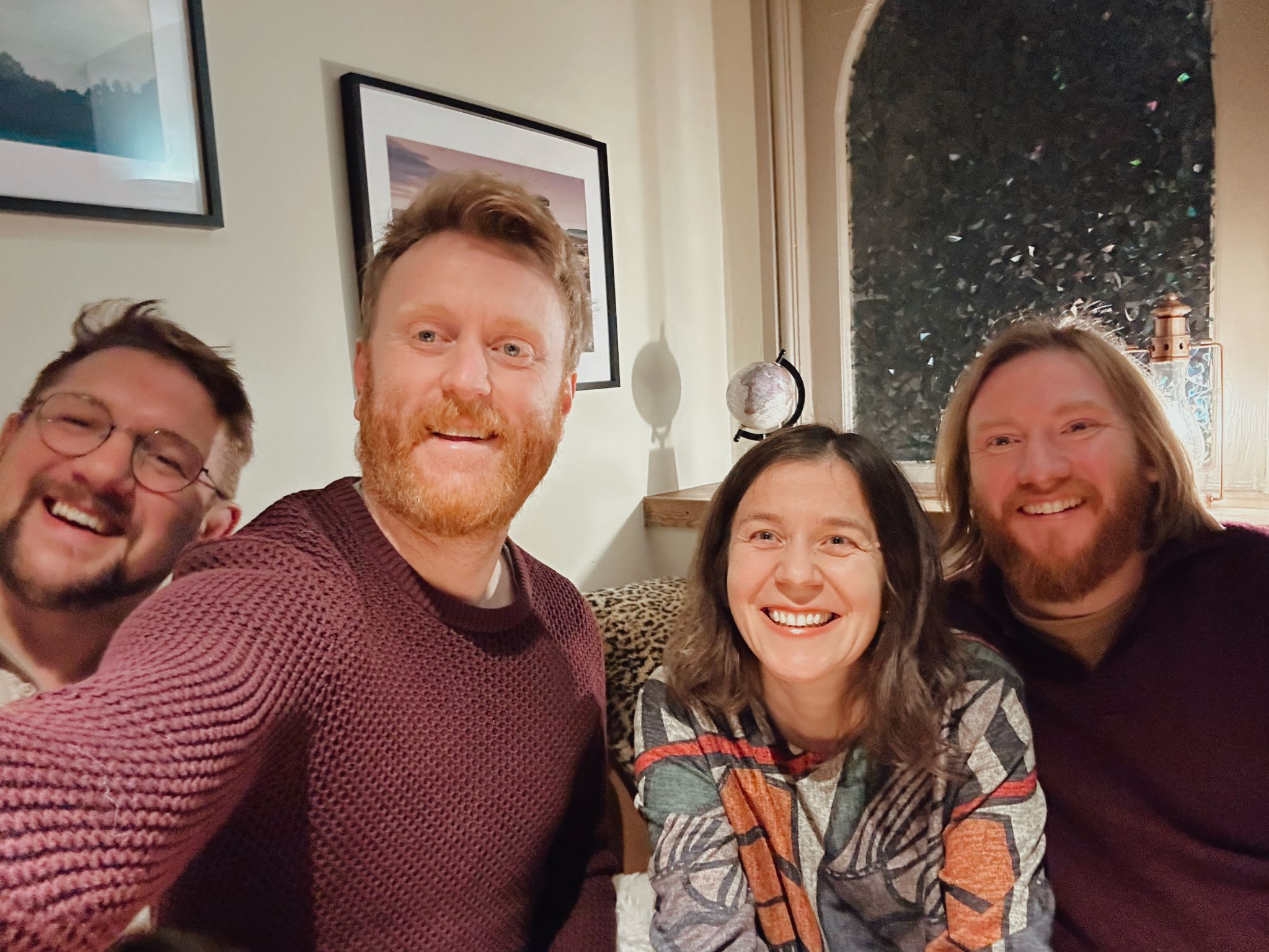
It began with a wonderful evening in Buxton with Rob and Paul, two of the three founders of Penrose Education and creators of Mosaic. The alignment between our visions—and the generosity of the conversation—set the tone for everything that followed. From Buxton we headed north, stopping in Edinburgh to meet Andrea English at the University of Edinburgh, whose work on productive struggle has deeply influenced our thinking, before continuing to Glasgow.
In Glasgow, we were very kindly hosted by Thomas Cowhitt at the University of Glasgow and Matt Gibson, Rector of the Glasgow Academy. Over a couple of days we observed the head of maths at TGA teach a class, and then ran through a live cycle of the tools we are developing to help teachers make sense of their classroom experiences. We learnt so much from those days—what is emerging from these collaborations is a shared inquiry into how AI can support teachers in that sense-making, and how, in exploring this together, we might all grow.

Last Thursday, this growing community came together publicly. Rob Caudwell, Thomas Cowhitt, Elena Oncevska Ager, and I joined a panel hosted by the Chartered College of Teaching—Exploring the use of AI to support sense-making in Initial Teacher Education—to share what we are learning and to invite others into the conversation.
Empowering Practitioners to Shape AI's Future
Throughout these conversations, a consistent conviction emerged: the future of AI in education must be shaped by practitioners, not imposed upon them.
Generic AI lacks precisely what many inexperienced mentors lack: knowing what matters in context. It resolves uncertainty rather than holding it open, offers answers rather than redirecting attention. Without the kind of listening and pointing we described above, AI defaults to being helpful in ways that bypass the thinking that matters most.
Through this partnership, we wish to empower Mosaic's network of experienced educators to be part of the conversation in shaping this future. These are the practitioners who know what quality mentoring looks like in their subjects, their schools, their contexts. Their expertise can inform how AI attends to trainees and where it points them—and in doing so, we all learn.
What Comes Next
We will be working closely with Penrose Education to explore how Noticing might sit within the Mosaic ecosystem, and they in turn will be exploring this with the institutions who use their platform. We will be listening, learning, and refining together.
If you are curious about what AI-supported mentoring could look like, or if any of this resonates with your own work, we would love to hear from you.
Written by Elena Oncevska Ager
Written by Elena Oncevska Ager
Elena Oncevska Ager is Full Professor in Applied Linguistics at Ss Cyril and Methodius University
in Skopje, North Macedonia.
Her work involves teaching English for Academic Purposes (EAP) and supporting the development of English
language teachers, in face-to-face and online contexts. Her research interests revolve around EAP and
language teacher education, with a focus on mentoring, group dynamics, motivation, learner/teacher
autonomy and wellbeing.
Elena is particularly interested in facilitating reflective practice, in its many forms, including
through using the arts and by using AI to facilitate it. Her investigations are designed in such a way
as to inform her practice of supporting learning and teaching.
Written by Matthew Ager
Written by Matthew Ager
Matthew Ager is Software Architect and Co-Founder of Noticing.
Following his PhD in Applied Mathematics, and two years lecturing Mathematics and Physics, he has almost 15 years
experience in product design and development. His professional motivation stems from recognising and understanding
patterns in data, both quantitatively and qualitatively.
Matthew is naturally a reflective practitioner, with a keen ability to notice and articulate the subtleties of
his own behaviour and that of others. He is passionate about helping others to develop their own reflective
practice through technology, for greater wellbeing and professional development.